AI Can Now Write a Decent Song. It Still Can’t Make It Sound Good.
Google DeepMind just pushed AI music generation to a new level. But no matter how good the composition gets, one thing hasn’t changed: it still has to come out of a speaker.
This week Google DeepMind rolled out Lyria 3.5 inside Flow Music, its latest music-generation model. The improvements are real: more natural melodic structure, lyrics that actually follow your prompt, better vocal expression, and far more control over the creative direction. AI-generated music is no longer a party trick — it’s becoming a production tool.
And it’s not just Google. OpenAI shipped two new transcription models this week — one built for low-latency, real-time speech, one optimized for batch workloads. The pattern is clear: on both sides of the audio world, creation and understanding of sound are being automated fast.
The bottleneck has moved to your living room
Here’s the uncomfortable part. When a model can compose a jazz arrangement with a proper walking bassline and brushed drums in seconds, the limiting factor in your listening experience is no longer the music. It’s the hardware playing it.
A laptop speaker physically cannot reproduce a bassline below ~200Hz. A phone speaker flattens the stereo image into a point source. All the nuance these models are learning to create — the air around a vocal, the decay of a cymbal, the width of a string section — dies in the last 30 centimeters between your device and your ears.
Audio engineers have a saying: your system is only as good as its weakest link. In 2026, the weakest link is almost never the source anymore. It’s the speaker.
What actually upgrades the experience
You don’t need a studio. You need three things:
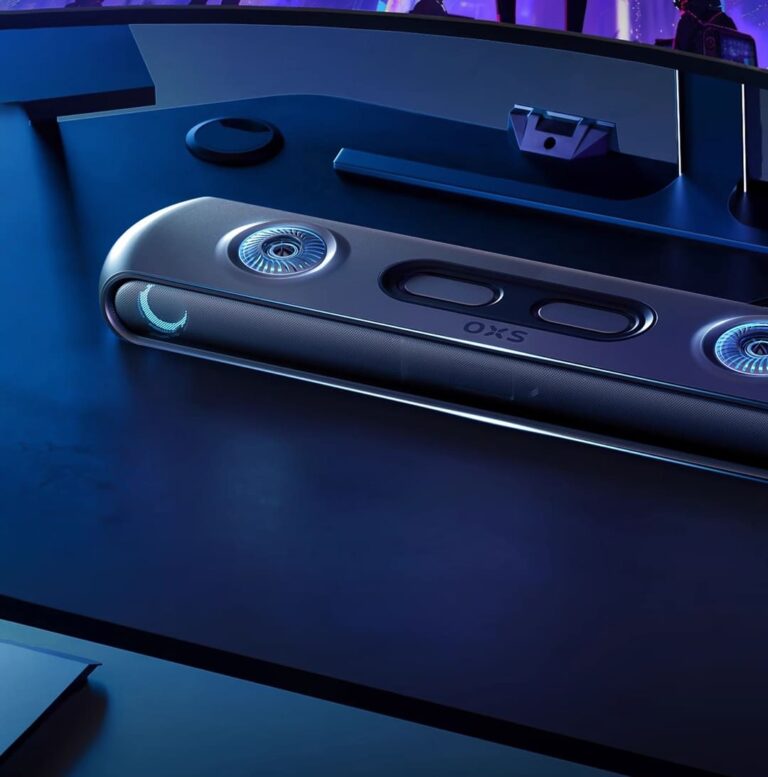
- A real woofer. Physics is non-negotiable — low frequencies need cone area and cabinet volume. This is why even a compact powered speaker with a dedicated bass driver sounds like a different universe compared to a phone.
- Stereo separation. Two drivers spaced apart create a soundstage. One driver can’t, no matter how clever the DSP.
- Clean amplification. Enough headroom that the bassline doesn’t turn to mush when you turn it up.
That bar is met by a proper Bluetooth speaker or an entry-level hi-fi setup — the kind of gear that used to be an enthusiast purchase and is now simply the correct endpoint for an AI-generated music library.
Our take
AI is about to flood the world with more music than has ever existed. That’s genuinely exciting — but it also means the value of playback quality goes up, not down. When every song can be generated to your taste, the difference between hearing it and feeling it is hardware.
If you’re still listening on a laptop, start with a well-built powered speaker. Something like the House of Marley Get Together 2 XL — real woofers, honest tuning, sustainable materials — will do more for your daily listening than any streaming upgrade. And if you want to go further, a proper component system like Jamo’s is where “AI-made” stops sounding like a compromise at all.
Gear Radar is our editorial corner: buying guides, reviews and tutorials for people who care about how things sound. No sponsored rankings, ever.