Sony’s $249 Phone Mic Records Spatial Audio — Playback Is Now the Hard Part
Spatial audio used to need a treated room and a rack of microphones. Sony just squeezed four of them into a 24-gram stick that plugs into your phone — and in doing so, quietly moved the hard part of immersive sound out of the studio and into your living room.
What Sony actually shipped
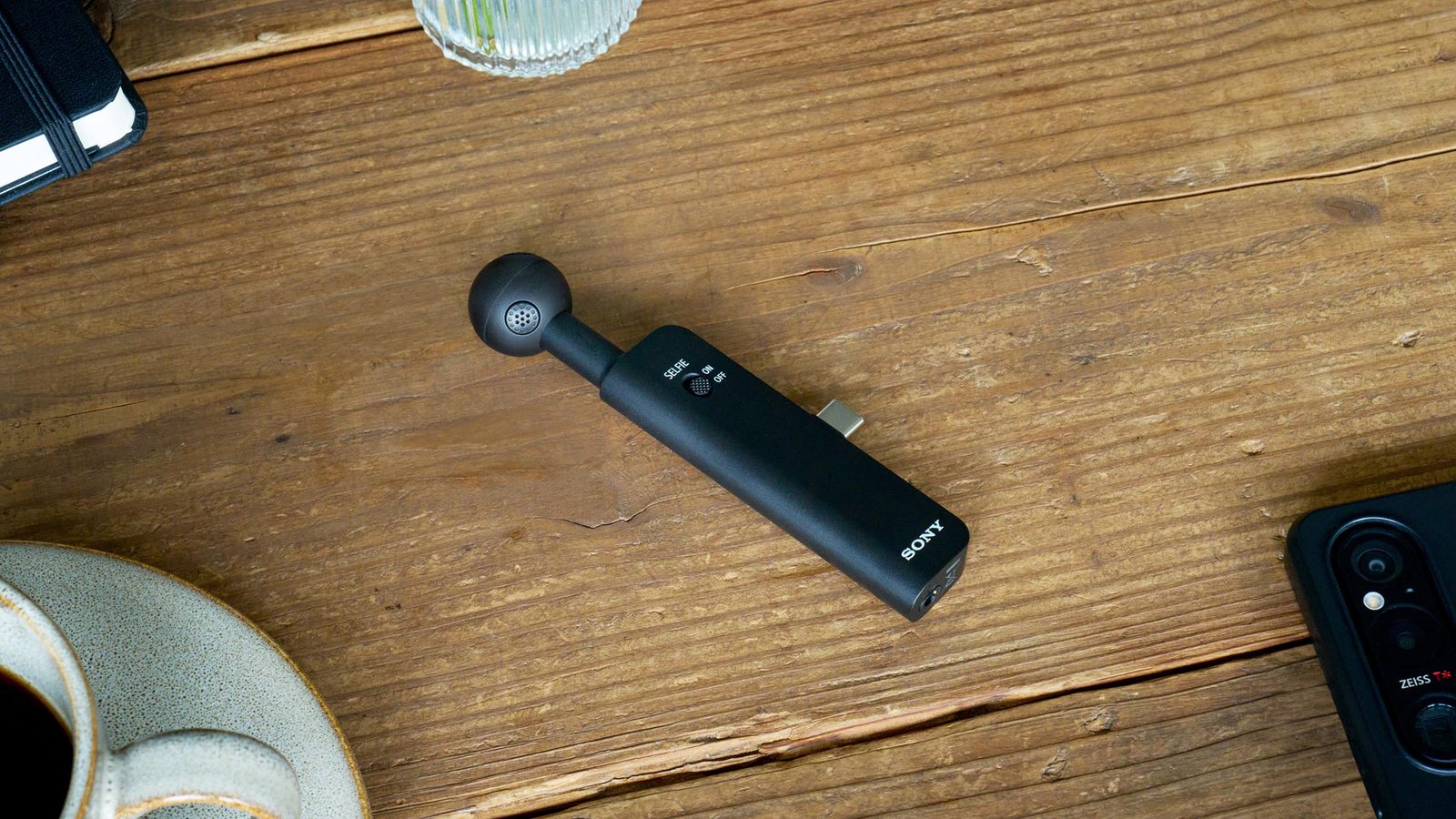
The ECM-AX10 is a $249 USB-C microphone aimed at vloggers, mobile filmmakers, and anyone who shoots on a phone. It carries four omnidirectional capsules and uses Sony’s own spatial processing to capture depth and distance, not just loudness. It records in three modes: Ambisonics for true spatial audio, binaural for a headphone-optimised immersive mix, and plain stereo. It weighs 24 grams, it draws its power from the phone, and Sony says it is the first microphone certified under Eclipsa Audio, the open spatial-audio format YouTube supports. Pre-orders are already open on Amazon and Sony’s own store.
The catch Sony said out loud
Here is the detail that matters more than the price. Sony itself suggests the binaural mode “may suit most creators seeking an immersive experience,” because Ambisonics spatial audio “will likely only work properly on YouTube.” Read that again: the flagship spatial format only survives playback on one platform. Everywhere else — Instagram, TikTok, a podcast app, a client’s laptop — the spatial file either collapses to stereo or gets ignored entirely.
That is not a knock on Sony. It is the honest state of a format war that is still being fought, and it is the same reason the phrase “recorded in spatial audio” on a video tells you almost nothing about what you will hear.
The bottleneck just moved
For a decade, the ceiling on immersive audio was capture. You could not make spatial content without spatial gear, and spatial gear meant money, bulk, and a workflow most phone shooters would never touch. That ceiling just fell to $249 and 24 grams.
The new ceiling is playback. A spatial mix played back through a phone, a laptop, or a single virtualised soundbar is flattened straight back to stereo — the height and the depth the microphone captured simply have nowhere to go. The microphone did its job. The room let it down.
That is the part worth understanding even if you never record anything. The entire value of spatial capture is realised — or destroyed — at the last step of the chain, in the speakers actually in your room.
What it means in practice
If you shoot on a phone, the sensible default is now binaural: it survives on every platform, and it is the mode Sony itself points creators toward. Keep Ambisonics for when YouTube is genuinely your main stage.
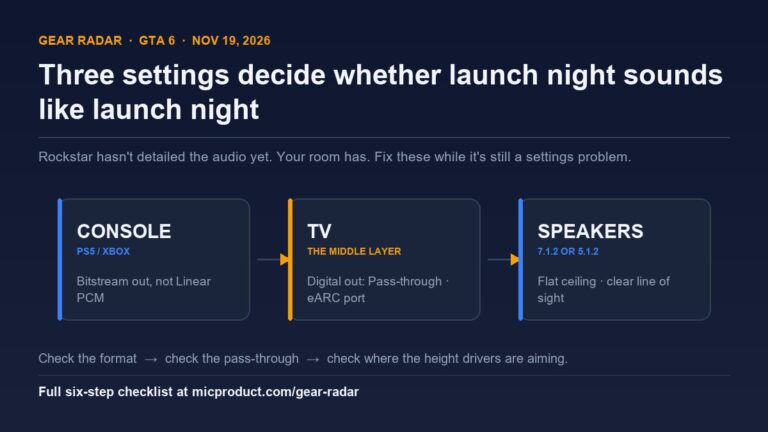
If you listen at home, treat the word “Atmos” on a box as a starting point, not an answer. The question that decides whether you hear any of this is whether the system has a real height layer or is merely faking one. Virtualised surround can sound impressively wide, but it cannot place an object above your head — and height is exactly the information a spatial recording carries. (We break the numbers down here.)
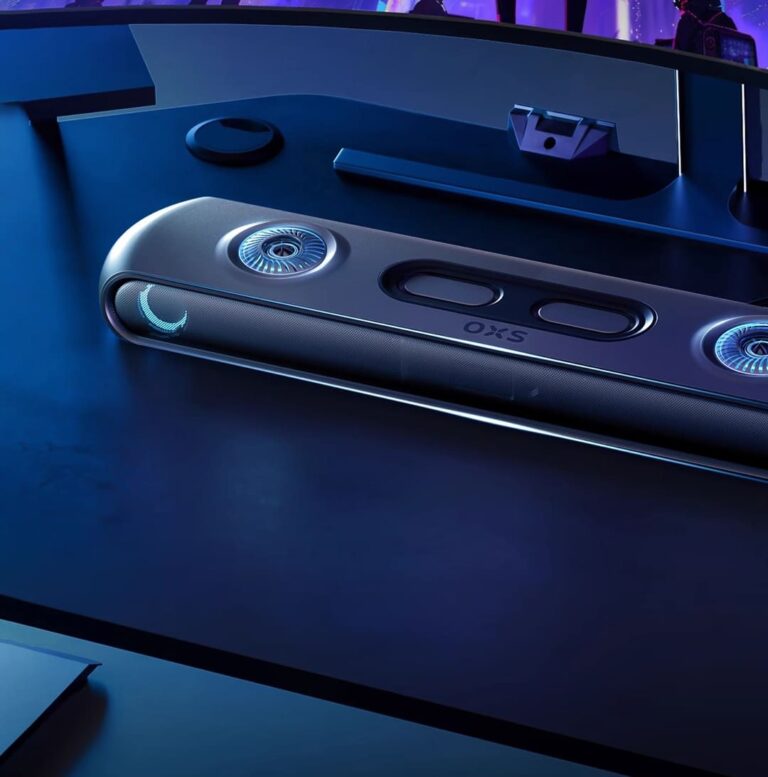
Two systems we sell do this honestly. The OXS Thunder Pro+ is a true 7.1.2 setup with two up-firing sky channels dedicated to the height layer. The Jamo HCS B5 is a 5.1.2 system built around real up-firing height units and an eight-inch wireless subwoofer — the cheapest genuine height layer we carry. Neither is a soundbar pretending. If you already own a bar and want to know whether your settings are quietly throwing the height layer away, start with our setup checklist.
Capture got cheap this week. Playback is still where immersive sound is won or lost.
Gear Radar is our editorial corner: buying guides, reviews and tutorials for people who care about how things sound. No sponsored rankings, ever.